

In My Shoes
By Ames S.

Becoming Different

Change is not the most popular word in an alcoholic’s vocabulary, but it’s one that cannot be ignored. For me, over the years, its perception and ultimate implementation in my life has, well, changed.

As an active alcoholic, change was something to be avoided at all costs, that is, of course, unless it somehow meant me getting more of what I wanted. If everybody else was willing to change to suit my particular needs and perception of how the world should be, then change was indeed something to be exalted, encouraged, and embraced with open arms.

However, if it meant that I had to change my own behavior to suit the world around me, it was definitely nothing but an evil plot, another misguided attempt by a hostile world to muzzle and subjugate free thinkers like me.

But change is something that can occur on a subconscious level, too, like an underground aquifer redistributing water below the surface. In my own life I experienced this kind of change in the years before I got sober, the foggy years at the end of my drinking. 

I am one who kept a journal for many years, cataloging in drunken, illegible scrawls the various twists and turns of my inner life. For me it was a full-time job, and I came to live more fully in my journal than I was living in everyday life.

Somewhere along the way, however, below the level of conscious choice, my handwriting actually began to change, from the cursive script I had learned as a child and carried with me through high school and college, to a more type-driven, individual block letter approach. It was as if some fundamental change was working its way to the surface, yet I never actually made a decision to pursue any particular course of action to bring it into being. 

Oddly, it was ultimately a change so distinctive that if one looked back in my journal on either side of the very temporary period of transition, the words would appear to have been written by another person. Unfortunately, though, while the actual writing had transformed, the words and the writer had not, and I continued drinking and carrying on with exactly the same kind of insanity as before.

Some years after the subconscious, underground changes to my handwriting, however, which seem in retrospect to have been a harbinger of things to come, I underwent what I would call a wholesale change where in the space of one evening I passed through a spiritual membrane of sorts, on one side of which was drunkenness and on the other was sobriety. It was the night I went to my first AA meeting and, though I didn’t know it at the time, the night of my last drink.

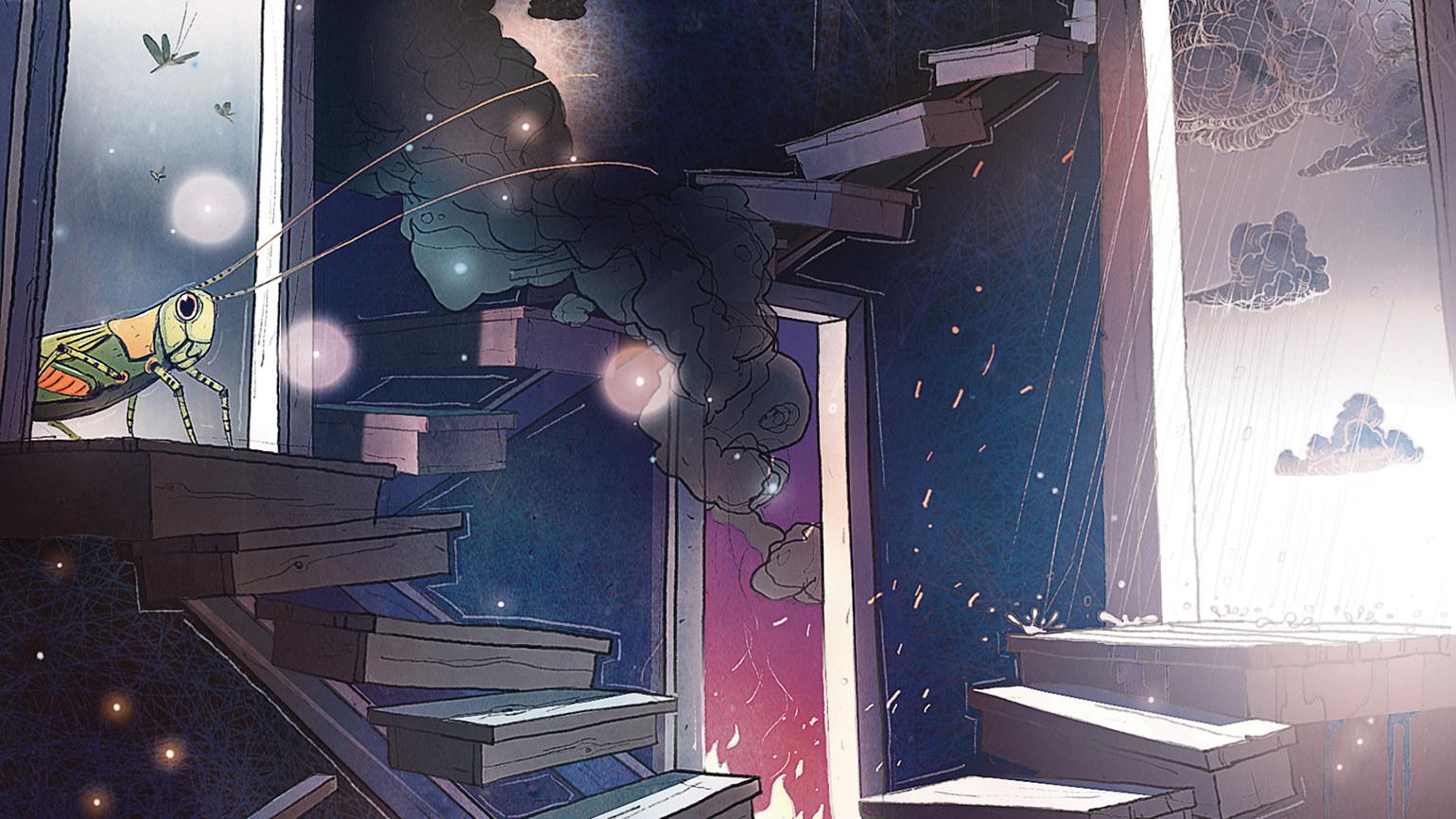
With that one huge alteration in my life, I began to undergo what I would call a series of incremental changes, changes that in and of themselves seemed uneventful but, when tacked on to the one just previous and the one just ahead, made my life as a newly sober alcoholic actually possible. Things as simple as walking on a different side of the street than I had always walked on before, especially if the old side of the street brought me past familiar liquor stores and old haunts. Changing the people, places and things that had populated and begun to strangle my life; incremental changes that began to move me away from the darkness toward the light.

As I began successfully staying away from a drink, however, I opened the door to my superstitious nature and moved into a period of forced changes, changes meant to solidify the progress I was making and guarantee success over negative odds in the future. It was a period of making rules, especially as they related to my prosecution of the AA program.

If something worked once, it became necessary to repeat it over and over again. For example, I found great solace in a meditation book focused on recovery and would read a page or so each morning before heading off to work. Before long, it became a rule and I felt like I had to do it or the world would somehow tilt out of its normal axis and dump a load of garbage directly into my life. I actually became afraid of not doing it and found myself one morning already on the way to work when I realized I hadn’t done my morning meditation and actually turned around and went back to my apartment, even though I was already late, to obsessively read through the meditation. Later that day, however, I realized that I had no idea what I had actually read that morning and came to understand that the rules I was erecting were actually just a way of keeping necessary changes out.

So, changes come to all of us, often unbidden, occasionally unwelcome, yet always trailing some new kind of opportunity or awareness.

I’m not always happy about change; I have grown more appreciative of stability over the years. Yet, I no longer feel change as a threat. It—and I—can coexist with the lifestyle I’ve developed after thirty-plus years of sobriety and, though I may grumble a bit when it comes a-knockin’, I recognize that change is a vital aspect of my relationship with a higher power. An aspect I can’t ignore. 

Ames graduated from Columbia University with a degree in Creative Writing and has worked in the alcoholism field for 25 years, writing on issues related to substance abuse.

For 15 years he was the editor of the A.A. Grapevine, the monthly magazine of Alcoholics Anonymous, before moving on to the National Council on Alcoholism and Drug Dependence where he was the Director of Communications.